Shattering the One-Size-Fits-All Myth: Introducing the Product Design Archetypes Framework
Author: Phoebe Ng | January, 2022
Throughout my career as a design leader, I have witnessed the limitations of adopting one-size-fits-all career growth guidelines within organizations. These generic frameworks often fail to develop talent effectively and stifle individual strengths, hindering employees' career journeys. For any progressive and innovative company, talent management necessitates a personalized approach that acknowledges and nurtures the unique strengths, aspirations, and development paths of each individual.
During my tenure at Endeavor as a VP of Product Design, I led the development of the Product Design Archetypes Framework – a comprehensive tool designed to embrace the diverse roles and responsibilities our designers undertake. This framework fosters meaningful dialogue between designers and their managers, creating an environment conducive to personalized career growth and development.
The framework begins by gaining a deep understanding of the distinct archetypes within our design team. By recognizing and leveraging the strengths of each archetype, we empower our professionals to maximize their potential and make impactful contributions. Additionally, the framework enables designers to identify success factors they can excel at while remaining cognizant of potential pitfalls to avoid.
I shared the Product Design Archetypes Framework with the designers at Endeavor, enabling them to understand their unique strengths and areas for growth. This transparent approach allows designers to actively shape their future careers, whether they aspire to develop within their current archetype or transition to a new one.
Through this tailored approach, we nurture a culture that celebrates individuality, promotes creative expression, and unlocks the full potential of our remarkable talent pool. We recognize that every designer brings a unique perspective, skillset, and passion to the table, and it is our responsibility to provide them with the guidance, support, and opportunities to thrive. The Product Design Archetypes Framework is a testament to our commitment to nurturing a diverse and inclusive workforce, where talent is nurtured, and individual excellence is celebrated.
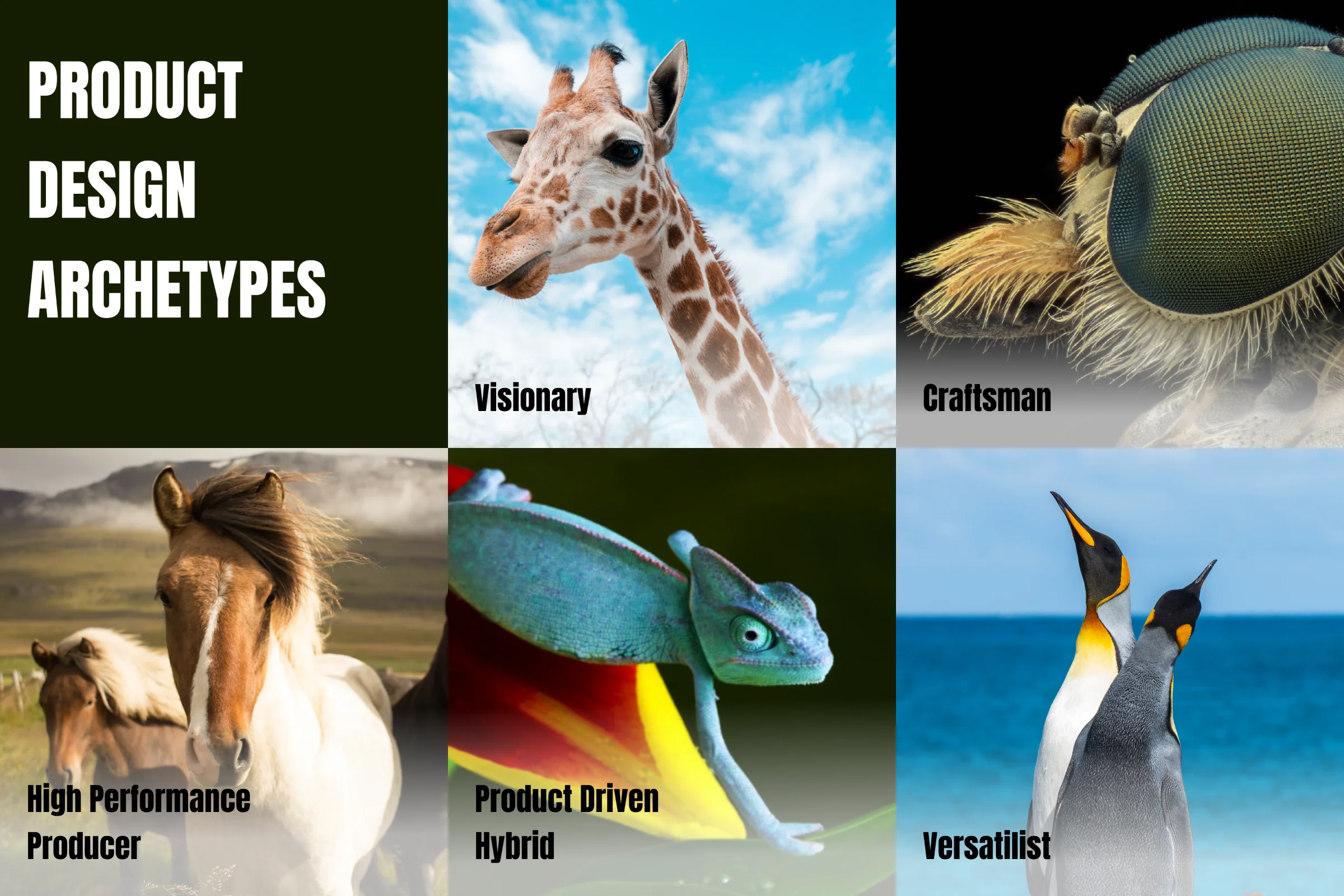
Five Product Design Archetypes
VISIONARY
Visionary tackles significant or ambitious problems and delivers clear, compelling, and creative proposals for solving them.
Highly creative individual who generates ideas that others haven't considered, thereby reshaping the team's objectives.
Influential and persuasive communicator, capable of conveying an inspiring narrative about the significance of their vision, thereby rallying others and generating momentum for their ideas.
Success criteria are attained through the effective incorporation of innovative ideas into roadmaps and the steering of product strategy.
Traps To Avoid
Confusing vision with short-term execution
Lacking a strong perspective in vision
Assigning equal weight to all ideas
CRAFTSMAN
Craftsman excels in tasks that demand profound, specialized expertise or skills, delivering unmatched quality.
Their output frequently establishes a benchmark within both the company and the broader design industry.
Diligent in approach and purposeful in their output, they consistently uphold high standards.
They offer insightful solutions to any challenges presented to them.
Success criteria are attained through sustained excellence and influence in elevating standards for others, and/or through successful project outcomes where exceptional craftsmanship is crucial for success.
Traps To Avoid
Impeding innovation by insisting on unattainable perfection
Imposing unrealistic expectations on others
Losing sight of the broader perspective
HIGH-PERFORMANCE PRODUCER
High-Performance Producer is a highly efficient and productive individual who consistently delivers abundant high-quality design output within tight deadlines.
Versatile and adaptable, capable of tackling diverse design challenges even under pressure, and generating a plethora of innovative solutions. They are highly valued by cross-functional teams for their collaborative approach.
Demonstrates a robust design process, evident in their extensive exploration and experimentation within their work.
Success criteria are attained through consistently strong execution of design across multiple projects, resulting in successful outcomes.
Traps To Avoid
Overcommitting
Emphasizing outputs without considering outcomes
Prioritizing others' satisfaction over personal well-being
PRODUCT-DRIVEN HYBRID
Product-Driven Hybrid is an individual also known a system designer, adepts at addressing substantial, ambitious challenges and crafting precise and actionable frameworks to address them.
They are highly pragmatic and focused on impact. They grasp the intricacies of existing constraints and prioritize elements crucial to achieving defined objectives.
They collaborate effectively with Product Managers and can propel progress even in the absence of or with a less experienced PM. They are capable of leading initiatives or cultural shifts that enhance team dynamics.
Success criteria are attained by shaping product strategy and/or effectively executing pivotal initiatives to achieve successful outcomes.
Traps To Avoid
Forgetting to design
Mistaking effort for outcomes
Being overly cautious
VERSATILIST
Versatilist is adaptable and flexible in nature, adepts at fulfilling a wide range of project needs.
Possesses a sufficient skill set to contribute effectively within a team, driven by a strong desire for continuous learning and skill refinement, demonstrating competence across various design tasks.
Displays traits from multiple archetypes, defying categorization into a single mold.
Success criteria are attained through ongoing learning to acquire skills necessary for addressing well-defined challenges in projects, resulting in successful outcomes.
Traps To Avoid
Underestimating complexity
Forgetting core competencies
Impatience with change
Final Thought
Product Designer Archetypes help identify a designer’s strengths. They paint a picture of what a successful Product Designer looks like to each individual and help guide the conversation for career development. By embracing this personalized approach to talent development, we can foster an environment that empowers our designers to reach their full potential, driving innovation and enhancing the overall success of our organization.
